
Here are Top 5 Stadiums in Malaysia since 1987
Malaysia’s top 5 stadiums—Bukit Jalil, Sultan Ibrahim, Shah Alam, Merdeka and Sarawak, —represent milestones in national pride, design evolution, and urban development. From Merdeka’s independence legacy to Bukit Jalil’s modern grandeur, these venues reflect Malaysia’s architectural ambition, global sporting relevance, and cultural identity across decades of transformation.
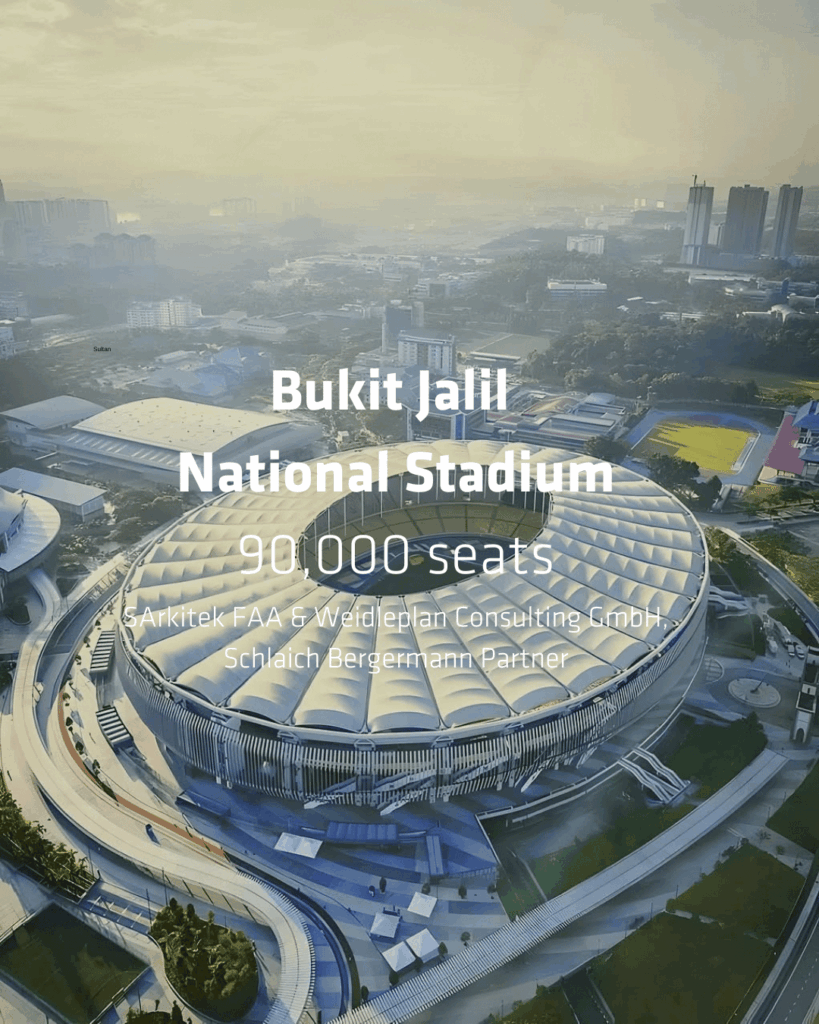
1. Bukit Jalil National Stadium
Architects: Arkitek FAA & Weidleplan Consulting GmbH, Schlaich Bergermann Partner
Renovation (2017): Populous & RSP KL
Contractors: UEM Group, MRCB (2017 renovation)
Seating Capacity: 90,000
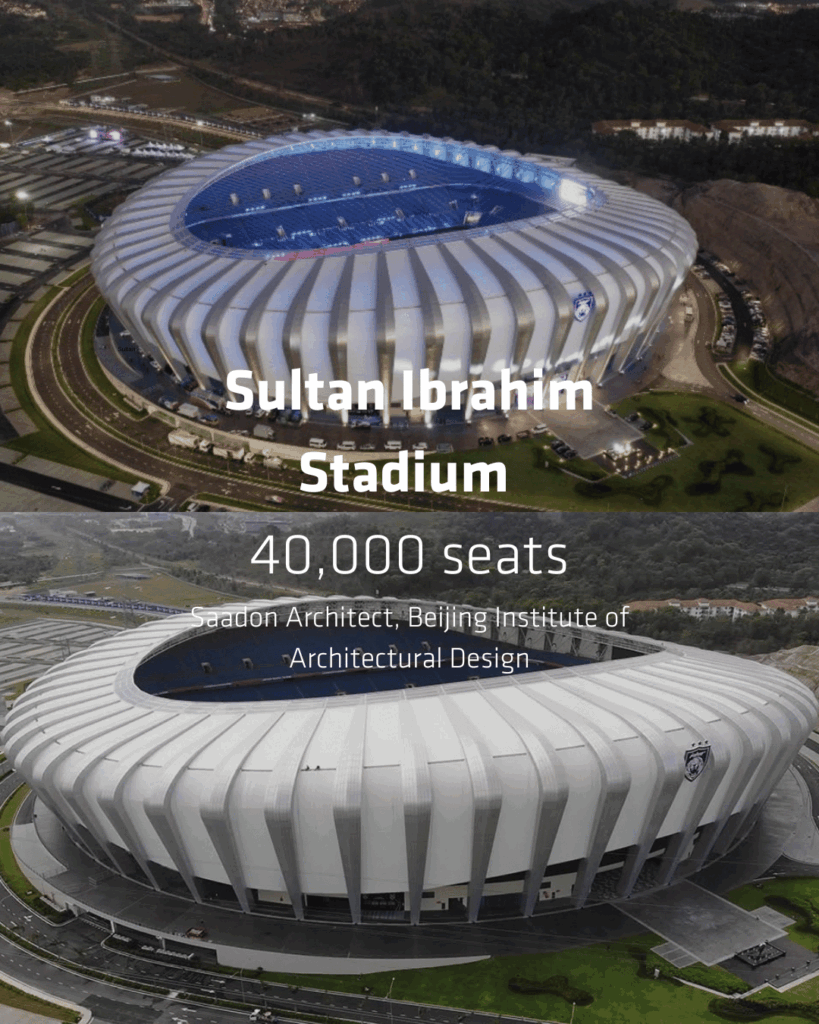
2. Stadium Sultan Ibrahim
Architects: Saadon Architect, Beijing Institute of Architectural Design
Contractor: Shanghai Baoye Group (Malaysia) Sdn Bhd
Seating Capacity: 40,000
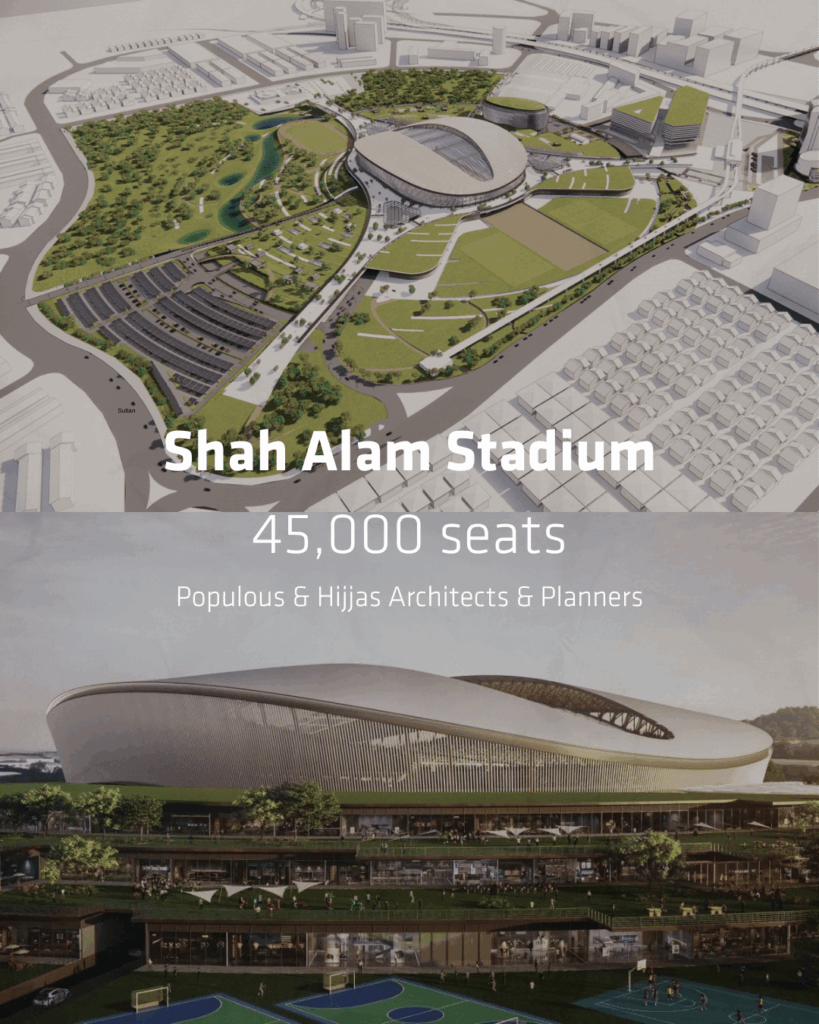
3. Shah Alam Stadium (under redevelopment)
Architects: Populous & Hijjas Architects & Planners
Contractor: MRCB
Seating Capacity: 34,000 – 45,000 (post-redevelopment target)
Construction Period: 48 months (Expected completion in 2029)
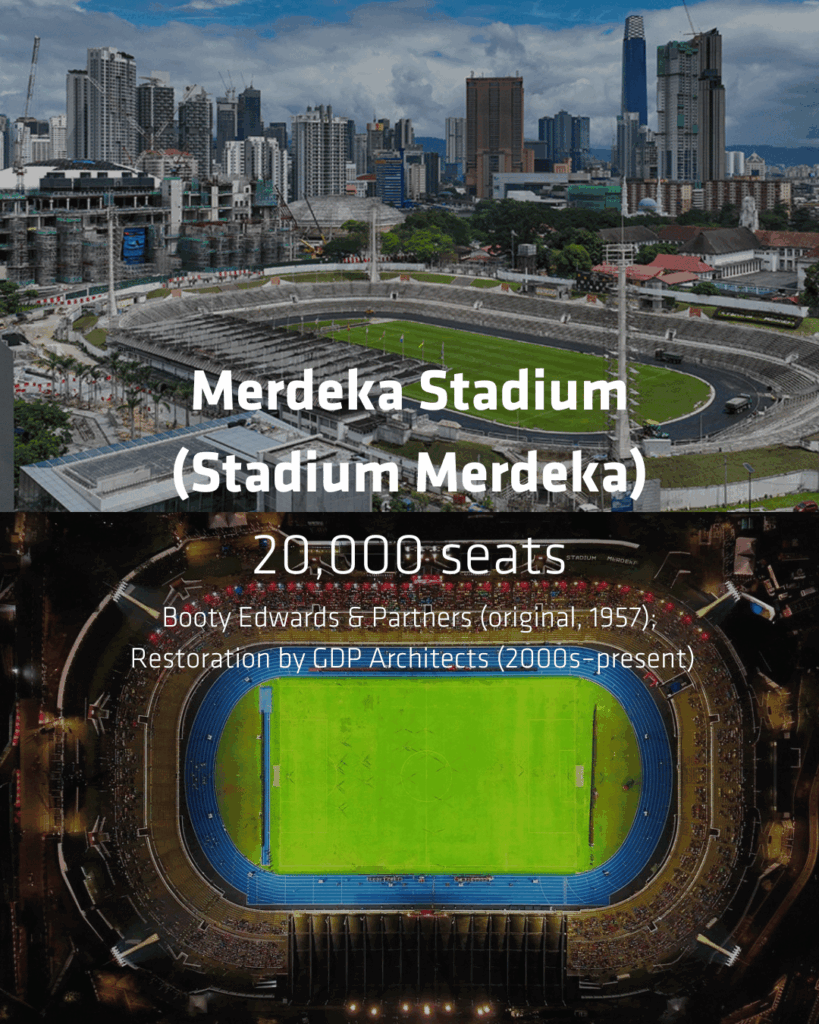
4. Merdeka Stadium (Stadium Merdeka)
Architects: Booty Edwards & Partners (original, 1957);
Restoration by GDP Architects (2000s–present)
Contractor (Restoration): Various; major works handled under Khazanah Nasional via Think City and related partners
Seating Capacity: Originally ~20,000; varies depending on restoration phase and intended use
Construction Period (Original): Completed in 1957 (ahead of Malaysia’s independence)
Heritage Status: Designated a National Heritage Site in 2005
Current Status: Under restoration and conservation for adaptive reuse—aimed at cultural, sporting, and public events
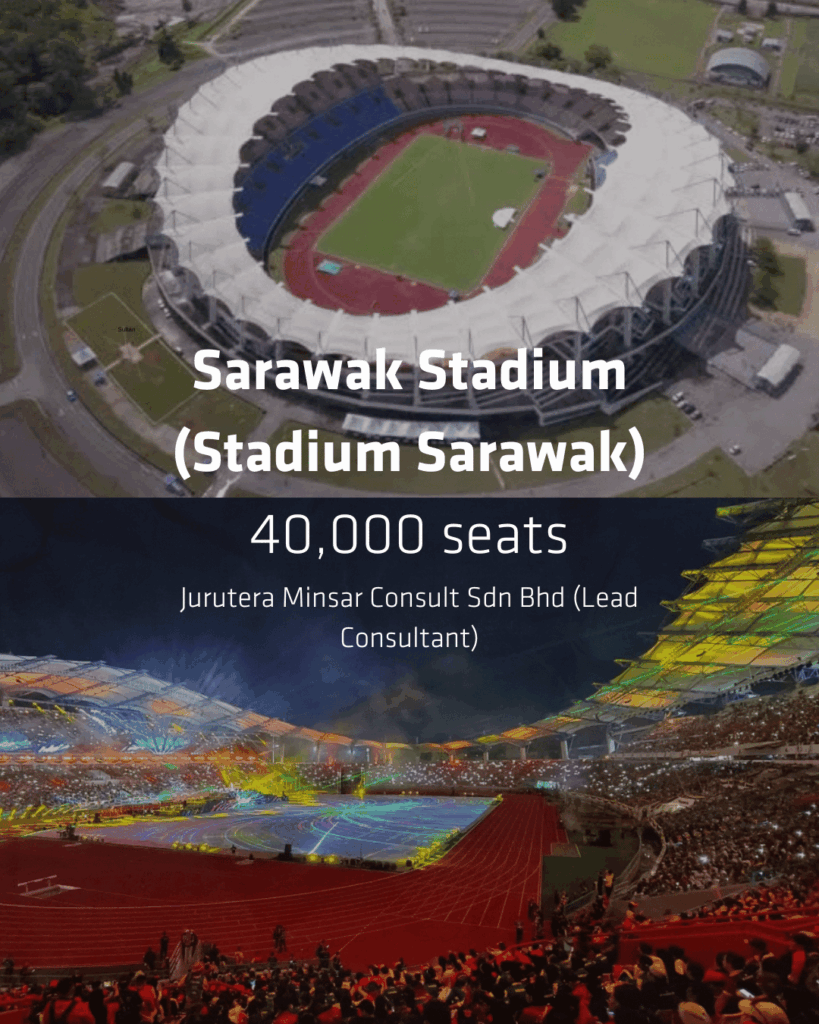
5. Sarawak Stadium (Stadium Sarawak)
Architect: Jurutera Minsar Consult Sdn Bhd (Lead Consultant)
Contractor: Global Upline Sdn Bhd (for renovations/upgrades)
Seating Capacity: ~40,000
Construction Period: Completed in 1997 ahead of the 1997 FIFA World Youth Championship
Current Status: Operational; has undergone phased upgrades since 2016 for athletics and football use
Stadiums act as powerful economic generators by attracting large-scale events—such as sports tournaments, concerts, and festivals—that boost tourism, create jobs, and stimulate spending in hospitality, retail, and transportation sectors.
They also catalyze urban development, increase land value, and encourage long-term investment in surrounding infrastructure and commercial activities.

We publish your projects !
Reachout to our marketing team to market you projects
Note: To protect our designers & suppliers community from spam and harassment. Your contact requested will be routed to Buildex.my representative. We will connect you to the representative asap.
